INTERDISCIPLINARY RESEARCH COLLABORATION
Understanding membrane permeability
and efflux in antimicrobial resistance
BARRIER brings together expertise in microbiology, bioinformatics, metabolomics and mathematical modelling across four research institutes to uncover how bacterial membrane permeability and efflux influence antimicrobial resistance.
About BARRIER
BARRIER is an interdisciplinary research collaboration bringing together microbiology, bioinformatics, metabolomics and mathematical modelling to understand bacterial membrane permeability and efflux in antimicrobial resistance.
By combining experimental and computational approaches across four leading research institutes, we aim to uncover fundamental mechanisms of antimicrobial resistance and accelerate the development of new therapeutic strategies.
Our Research
Our interdisciplinary approach combines experimental biology with computational science to understand antimicrobial resistance across multiple scales.
Bioinformatics
Identifying antimicrobial resistance mechanisms using multi-omics, including transcriptomics and transposon insertion sequencing.
Mathematical Modelling
Developing mathematical models to predict antimicrobial transport within bacteria and understand its role in resistance.
Metabolomics
Characterising bacterial metabolism and physiological responses to various antimicrobial stresses and environmental conditions.
Microbiology
Investigating bacterial membrane permeability and efflux through experimental microbiology to understand their roles in antimicrobial resistance.

Funded by BBSRC
BARRIER is supported by a Biotechnology and Biological Sciences Research Council (BBSRC) strategic Longer and Larger (sLoLa) grant.
Leadership Team
BARRIER is led by six principal investigators whose complementary expertise spans microbiology, bioinformatics, metabolomics and mathematical modelling across four leading UK research institutions.


Professor Andrew Edwards
Imperial College London
Molecular Microbiology

Professor Sara Jabbari
University of Birmingham
Mathematical Biology
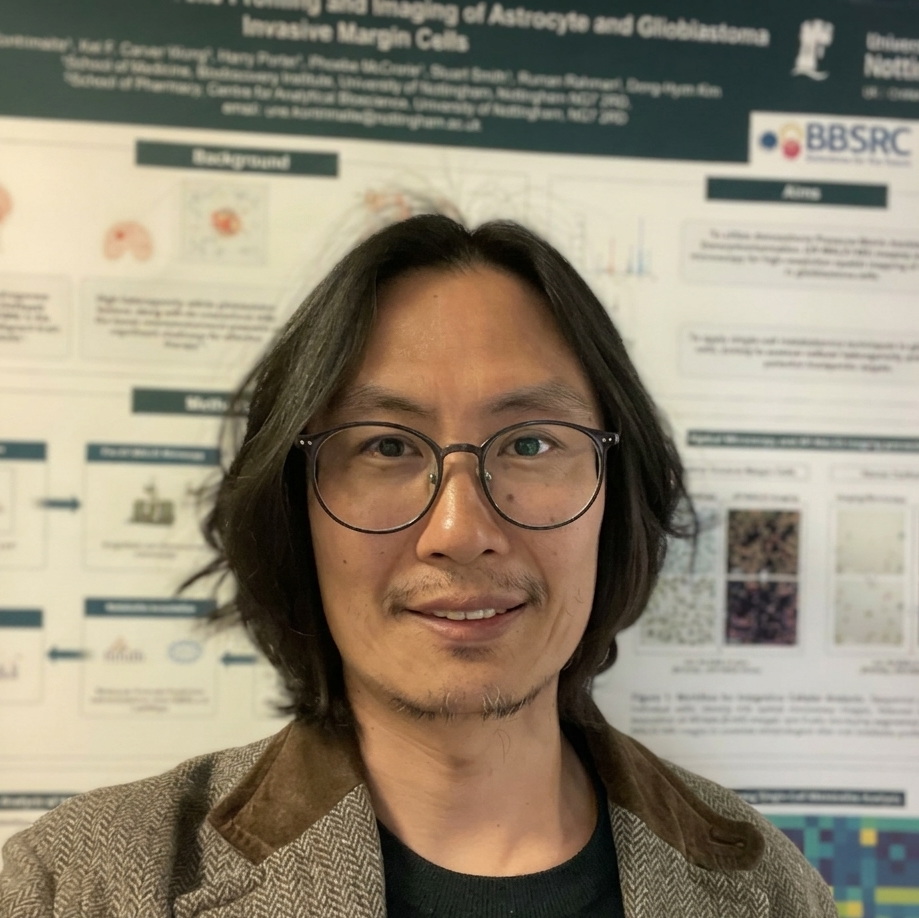
Dr Dong-Hyun Kim
University of Nottingham
Analytical Bioscience

Professor Tim Overton
University of Birmingham
Microbial Physiology

Professor Mark Webber
Quadram Institute
Antimicrobial Resistance Evolution
Collaborating Institutions
BARRIER brings together researchers from four leading UK institutions, combining complementary expertise to tackle antimicrobial resistance.




Explore Our Research
Discover how BARRIER is investigating bacterial membrane permeability and efflux through interdisciplinary research.